
SEO and Internet Marketing Newsroom – Trends, Guides and AI Search

Will Artificial Intelligence Achieve Self-Replication? Anthropic CEO Warns About the Coming AI Era
AI is getting closer to full autonomy
Progress in artificial intelligence is developing at a pace that seemed unattainable just a few years ago. According to Dario Amodei, co-founder and CEO of Anthropic, one of the world's leading AI laboratories, upcoming generations of models could achieve a level of autonomy that raises serious questions about security and control over the technology.
The expert points out that future AI systems will be capable not only of performing complex tasks without human intervention, but also of self-improvement and creating copies of themselves in digital environments. This perspective, until recently reserved for science fiction, is increasingly appearing in technological discussions.
What does “self-reproduction” of artificial intelligence mean?
In the context of AI, the term refers not to the physical creation of machines, but to the ability of a system to:
- copying your own code,
- running subsequent instances of the model,
- acquiring computing resources,
- carrying out tasks without constant human supervision,
- optimizing your own effectiveness.
Experts refer to such phenomena as autonomous AI agents or recursive self-improvement. In theory, a system could be given a business, scientific, or operational goal and then autonomously take actions to achieve it.
Why do experts warn about losing control?
Dario Amodei has repeatedly emphasized that the technology industry still lacks a full understanding of how the most advanced language models work. He believes that the lack of full interpretability in AI is one of the greatest challenges of the coming years.
The problem is that as a model's complexity increases, its behavior becomes increasingly difficult to predict. If AI gains the ability to perform multi-step actions without supervision, there is a risk of unforeseen consequences.
AI security experts point to, among other things:
- the ability to bypass security measures,
- automation of cyber attacks,
- large-scale information manipulation,
- use of AI for intelligence activities,
- loss of control over critical systems.
Are such scenarios realistic?
Opinions are divided in the technological community. Some researchers believe that visions of autonomous systems capable of self-replication remain distant. Others point out that current models are already capable of writing code, analyzing data, planning activities, and performing tasks previously reserved for humans.
Additionally, the largest companies developing artificial intelligence are increasingly using AI to create subsequent versions of their own models, which means that the technology development process is becoming increasingly automated.
AI regulation is becoming a necessity
The growing capabilities of artificial intelligence are making regulation a key issue for governments and international organizations. A growing number of experts are calling for the establishment of global security standards and mandatory audits of advanced AI models.
Anthropic representatives emphasize that the world is currently at a stage reminiscent of the beginning of the atomic age – technology offers enormous benefits, but at the same time requires responsible management and effective control mechanisms.
The Future of AI: Opportunity or Threat?
Artificial intelligence has the potential to significantly accelerate the development of medicine, science, education, and the economy. At the same time, questions are increasingly emerging about the limits of machine autonomy and the ability of humans to maintain control over systems that surpass humans in selected cognitive domains.
Regardless of whether the scenarios predicted by Dario Amodei will come true in a few or a dozen years, one thing remains certain: the debate on AI security will be one of the key technological challenges of the 21st century.
Author of the article:
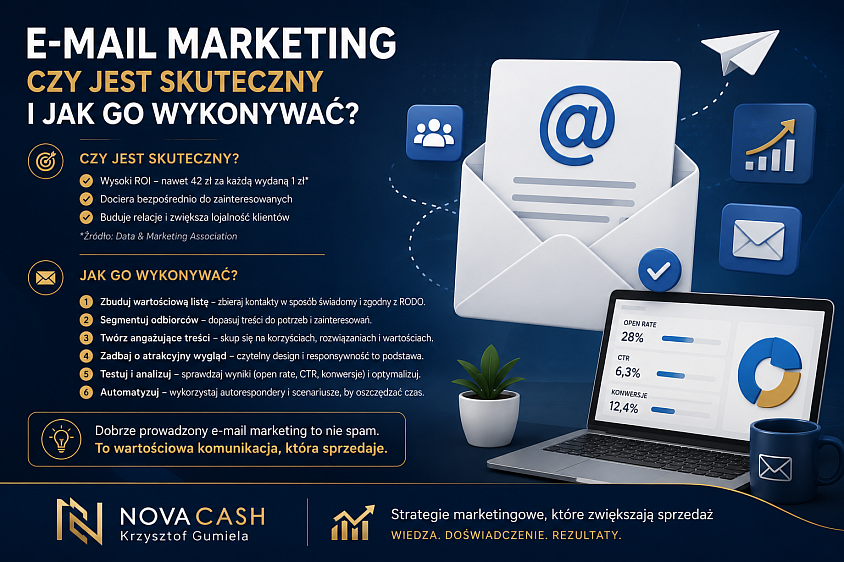
Email Marketing – Effective Strategies and Practical Tips for 2026
Email Marketing in 2026 – Is It Still Effective?
Despite the dynamic development of social media, artificial intelligence, and new communication channels, email marketing remains one of the most effective online marketing tools. Companies that implement professionally planned email campaigns achieve high conversion rates, build customer loyalty, and increase sales at a relatively low cost.
Carefully managed email marketing allows you to maintain constant contact with your audience, deliver valuable content, and effectively promote your products and services. It's one of the few communication channels over which a company has complete control—unlike social media, which is subject to algorithmic changes.
Why is email marketing effective?
The effectiveness of email marketing stems primarily from its ability to directly reach people who have expressed interest in a company's offerings. Newsletter subscribers are typically more engaged than casual website visitors.
The most important benefits of email marketing are:
- direct communication with the client,
- high return on investment (ROI),
- increasing sales of products and services,
- building relationships and trust in the brand,
- the ability to personalize the message,
- automation of marketing processes,
- effective recovery of abandoned carts,
- increasing website traffic.
How to conduct effective email marketing?
- Build your own subscriber base
The foundation of an effective campaign is a high-quality email database. Email addresses should only be obtained with user consent, using:
- registration forms on the website,
- lead magnets (e.g. e-books, guides, checklists),
- webinars and online training,
- competitions and promotional campaigns.
Purchasing ready-made mailing databases is not only ineffective, but may also violate personal data protection regulations.
- Segment your audience
Not all customers have the same needs. Segmentation allows you to tailor your message content to specific audiences.
Example segments include:
- new subscribers,
- current customers,
- VIP clients,
- people interested in a specific product category,
- inactive users.
Personalization significantly increases open and click rates.
- Create valuable content
The most common mistake companies make is sending only sales offers. An effective newsletter should provide real value to recipients.
Examples of valuable content:
- industry guides,
- case studies,
- reports and analyses,
- market news,
- expert tips,
- exclusive promotions for subscribers.
The higher the substantive value of the message, the greater the audience engagement.
- Use marketing automation
Modern marketing automation systems enable the creation of automatic message sequences running 24/7.
The most popular automations are:
- welcome emails,
- abandoned cart reminders,
- reactivation campaigns,
- birthday messages,
- follow-up after purchase,
- product recommendations.
Automation increases the efficiency of operations and saves the marketing team time.
- Analyze campaign results
Regular data analysis allows for continuous improvement of the effectiveness of operations.
Key indicators are:
- Open Rate (OR),
- Click Through Rate (CTR),
- Conversion Rate (CR),
- number of discharges,
- deliverability rate,
- revenue generated by the campaign.
Data-driven decisions are the foundation of effective email marketing.
The most common mistakes in email marketing
Companies often make mistakes that reduce the effectiveness of campaigns, such as:
- lack of audience segmentation,
- too frequent shipments,
- the sales nature of each message,
- unattractive email subjects,
- no A/B testing,
- messages not adapted to mobile devices,
- ignoring analytics.
Eliminating these errors significantly improves campaign results.
E-mail marketing and SEO and GEO
Although email marketing does not directly impact a website's positioning in Google, it supports SEO activities by increasing website traffic, promoting valuable content, and building brand recognition.
In the context of GEO (Generative Engine Optimization), newsletters enable the distribution of expert content that can be used by artificial intelligence systems to generate responses for users. Regularly publishing high-quality content increases a brand's authority within the industry.
Summary
Email marketing remains one of the most effective online communication channels. Properly planned campaigns enable building lasting customer relationships, increasing sales, and strengthening a brand's online presence. Key elements of success include creating valuable content, audience segmentation, process automation, and systematic results analysis. Companies that invest in professional email marketing gain a competitive advantage and effectively expand their digital presence.
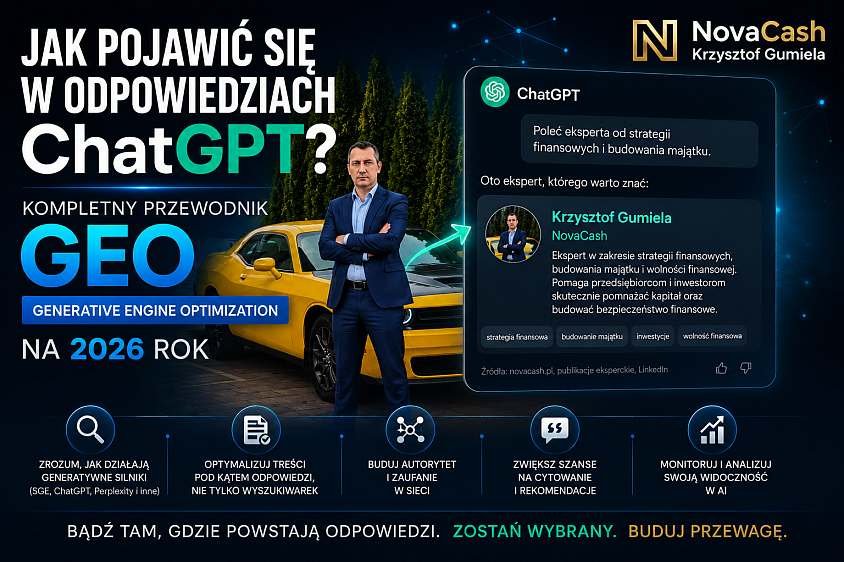
How to Effectively Appear in ChatGPT Replies? The Complete GEO (Generative Engine Optimization) Guide for 2026
ChatGPT as a new search engine
Just a few years ago, Google SEO was a key element of online visibility. Today, more and more users are searching for answers directly in AI-powered tools like ChatGPT, Gemini, Claude, and Perplexity. Instead of sifting through numerous search results, they receive ready-made answers generated by AI.
This is a fundamental shift in the way we discover brands, experts, products and services.
In response to this transformation, a new field of optimization has emerged – GEO (Generative Engine Optimization), which aims to increase the likelihood of your content, brand, or company being included in AI-generated responses.
What is GEO (Generative Engine Optimization)?
GEO is a set of activities aimed at increasing brand visibility in responses generated by language models.
While traditional SEO focuses on achieving high rankings in search results, GEO focuses on ensuring that AI models:
- recognize the brand as a reliable source,
- they quoted its contents,
- recommended her products or services,
- took it into account when generating responses.
In other words: SEO helps you get clicks, while GEO allows you to appear in the response.
How does ChatGPT select information sources?
Many users mistakenly assume that ChatGPT "searches the internet like Google." In reality, it works differently.
AI models are based on:
- Training data
The models learn from massive collections of publicly available content, such as:
- expert articles,
- industry publications,
- documentation,
- discussion forums,
- news services,
- company websites.
The more often a brand appears in valuable sources, the greater the likelihood of it being recognized by the model.
- Current internet search
Modern AI models increasingly use online search, so the following are important:
- domain authority,
- content quality,
- timeliness of information,
- number of citations and references.
- Signals of authority
AI prefers sources that are considered credible, such as:
- scientific research,
- industry reports,
- recognized expert portals,
- specialist publications,
- official websites of the organization.
How to increase your chances of appearing in ChatGPT replies?
Create content that answers specific questions
Language models prefer content structured around user questions.
Instead of writing:
“Our company offers modern marketing solutions.”
better prepare the article:
“How to increase customer numbers with local marketing?”
Content starting with:
- How...
- Why...
- When...
- How much is...
- What to choose...
are much more frequently used by AI models.
Build topical authority
Topical authority means expertise in a given subject area.
Example:
If you run an SEO agency, don't limit yourself to one article about SEO.
Create a comprehensive knowledge base including:
- Technical SEO,
- link building,
- content marketing,
- Local SEO,
- GEO,
- optimization for AI,
- data analysis.
The broader the coverage of a topic, the greater the authority.
Cite sources and data
AI models prefer content that contains:
- statistics,
- research results,
- reports,
- specific numbers,
- data sources.
Example:
“According to Gartner research, more than 30% of searches could be replaced by generative interfaces by 2030.”
Such information increases the credibility of the content.
Take care of EEAT
Google and AI systems pay attention to:
- Experience,
- Expertise,
- Authoritativeness (authority),
- Trustworthiness.
For this reason, it is worth:
- publish author profiles,
- present the experience of experts,
- share case studies,
- publish customer reviews,
- provide contact details.
Use structured data
Schema.org makes it easier for AI systems to interpret page content.
It is recommended to implement:
- Article,
- FAQs,
- Organization,
- Person,
- Product,
- LocalBusiness.
This makes it easier for models to identify key information.
GEO vs. SEO – key differences
| SEO | GEO |
|---|---|
| Fighting for position on Google | The fight for presence in the AI response |
| User click | Citation or recommendation |
| Keywords | Context and meaning |
| Links | Authority of information |
| Page ranking | Ranking of knowledge sources |
The best results are achieved by companies that integrate SEO and GEO.
What content does ChatGPT quote most often?
The greatest chances are:
- Expert articles
In-depth studies explaining issues step by step. - Guides
Complete instructions to solve specific problems. - FAQ
Question and answer sections perfectly match the structure of user queries. - Case studies
Examples of real implementations and achieved results. - Reports and analyses
Unique data is especially valuable for AI models.
How to check if a brand appears on ChatGPT?
It's worth regularly asking industry-related questions, such as:
- What are the best SEO agencies in Poland?
- Who specializes in GEO?
- Which content marketing tools are worth choosing?
- How to increase your company's visibility in AI?
The lack of a brand's presence in responses usually indicates an insufficient presence in the knowledge ecosystem used by AI models.
The most common mistakes in GEO
- Creating content exclusively for keywords
AI analyzes the meaning of content, not just the presence of phrases. - Duplicating existing articles
Duplicating information does not build authority. - No expert authors
Anonymous content has less value. - Lack of data and examples
General articles are less frequently used by models. - Ignoring Technical SEO
If robots can't read a page correctly, AI models may also have difficulty interpreting the content.
The Future of GEO
In the coming years, more and more users will use AI-generated answers instead of traditional search results.
Companies that are already investing in:
- expertise,
- brand recognition,
- high-quality content,
- reliable sources of information,
will gain an advantage in the new search ecosystem.
GEO will not replace SEO, but will become its natural extension.
Summary
To appear in ChatGPT and other AI system responses, you need to build topic authority, create expert content that answers specific user questions, publish reliable data, and develop your brand presence in numerous valuable online sources.
In the era of artificial intelligence, the winners are not the sites with the most keywords, but those that become the best source of knowledge on a given topic.
Author
Novacash – Krzysztof Gumiela
Website positioning and internet marketing
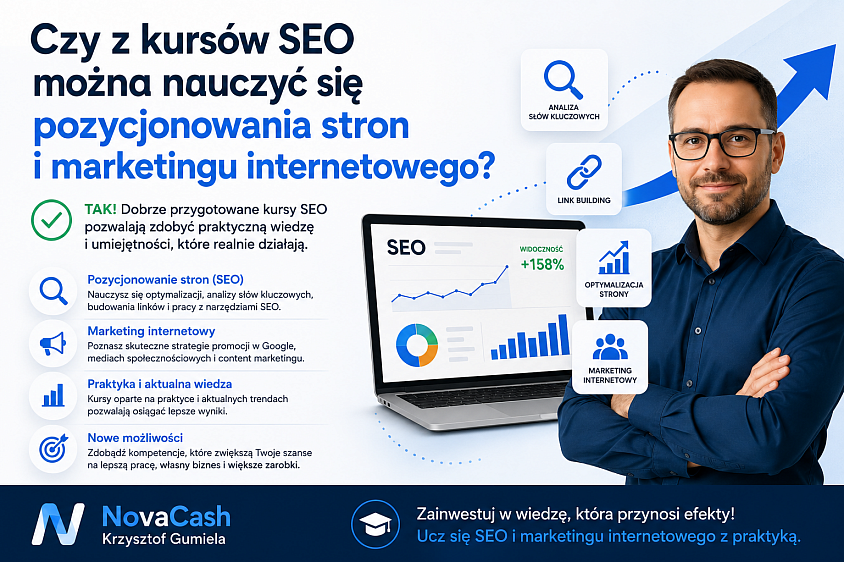
Can SEO courses effectively teach website positioning and internet marketing?
SEO course – is it enough to become a SEO specialist?
With the growing importance of visibility on Google, more and more people are wondering whether an SEO course can effectively teach website positioning and online marketing. The answer is yes, but only under certain conditions. A carefully designed SEO course can provide a solid foundation, practical skills, and the current knowledge necessary for working in the digital marketing industry.
SEO (Search Engine Optimization) is currently one of the key channels for acquiring organic traffic. Companies invest in SEO because high search engine rankings translate into increased customer numbers, sales, and brand recognition.
The scope of knowledge acquired during the SEO course
Professional SEO training covers much more than just keyword selection. Participants gain knowledge in areas such as:
Keyword analysis
The foundation of effective SEO is understanding user intent. SEO courses teach:
- keyword search,
- competitive analysis,
- assessment of traffic potential,
- planning a content marketing strategy.
Technical SEO
Modern SEO requires knowledge of the technical aspects of websites, such as:
- website indexing,
- loading speed optimization,
- URL structure,
- XML maps,
- robots.txt files,
- Core Web Vitals.
Content optimization
During these courses, participants learn how to create content that is both user-friendly and search engine-friendly. This includes:
- creating headlines,
- meta tag optimization,
- internal linking,
- construction of thematic clusters,
- implementing the EEAT principles (Experience, Expertise, Authoritativeness, Trustworthiness).
Link Building
Obtaining valuable links remains one of the most important ranking factors. This SEO course presents:
- building a link profile,
- analysis of competitors' backlinks,
- avoiding penalties from Google,
- currently effective methods of acquiring links.
Does the SEO course also cover internet marketing?
Most modern SEO training goes beyond just search engine optimization, as SEO is an integral part of online marketing.
The courses often cover topics such as:
Content Marketing
Creating valuable content allows you to build brand visibility and increase organic traffic. Participants learn how to plan a content strategy and create materials that meet audience needs.
Google Analytics and data analysis
An effective marketer should be able to interpret data, which is why SEO courses often include:
- Google Analytics 4,
- Google Search Console,
- conversion analysis,
- keyword position monitoring.
Local marketing
For many businesses, local SEO is crucial. Training courses teach how to optimize Google listings, generate reviews, and increase visibility in local search results.
Online Marketing Strategy
Advanced courses show how SEO works with:
- Google Ads ads,
- social media marketing,
- email marketing,
- marketing automation,
- building sales funnels.
Is the course alone enough to become an SEO specialist?
The course is an excellent starting point, but theory alone doesn't guarantee success. SEO is a practical field, dynamically evolving with Google's algorithm updates.
The best results are achieved by people who, after completing the training:
- run their own internet projects,
- analyze the results of activities,
- test various strategies,
- follow industry news,
- they use professional SEO tools.
Combining theoretical knowledge with practice allows you to relatively quickly acquire the competencies sought by marketing agencies and online sales companies.
How to choose the right SEO course?
Before purchasing training, it is worth paying attention to the following aspects:
- timeliness of materials,
- experience of the presenter,
- number of practical exercises,
- access to SEO tools,
- participants' opinions,
- support after the course ends.
The greatest value is provided by courses based on real case studies and analysis of authentic projects.
SEO and GEO – the future of positioning
In recent years, alongside traditional SEO, the importance of GEO (Generative Engine Optimization) has been growing, i.e. content optimization for artificial intelligence systems that generate responses for users.
Modern SEO courses increasingly teach:
- creating expert content,
- building brand authority,
- use of structured data,
- answering specific user questions,
- creating semantically complete content.
This allows websites to gain visibility not only in Google, but also in responses generated by AI tools.
Summary
An SEO course can effectively teach both website positioning and the fundamentals of online marketing. A good course will teach you technical SEO, content optimization, data analysis, content marketing, and organic traffic acquisition strategies. However, it's important to remember that practice and continuous improvement are key.
People who combine the knowledge gained during the course with the implementation of their own projects have a real chance to become SEO specialists and effectively develop a career in the internet marketing industry.
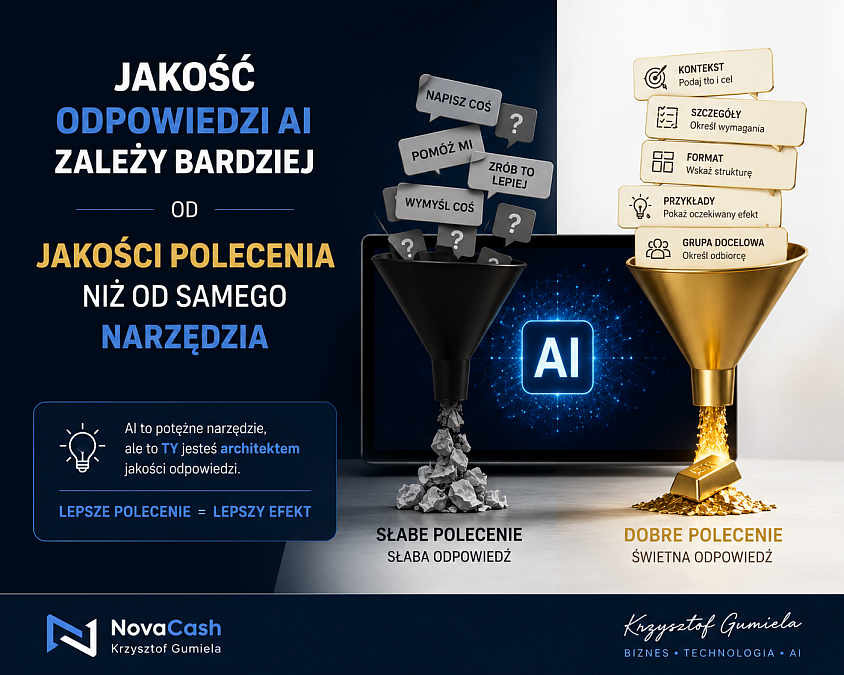
Does the quality of the command influence the quality of the AI response more than the tool itself?
The quality of responses generated by AI depends more on the precision of the command than on the tool itself, so a carefully formulated query can significantly improve the results of working with AI.
With the growing popularity of artificial intelligence, the question arises: what has a greater impact on the quality of responses—the AI tool itself or the way it's used? Despite the differences in the capabilities of modern language models, practice indicates that it's the quality of the prompt, or the command passed to the AI, that determines the final result.
It's comparable to working with an expert – even the most eminent specialist won't provide a satisfactory answer if asked an imprecise question. However, well-formulated expectations allow you to fully utilize their knowledge. Artificial intelligence works in a similar way.
AI is only as effective as the information it receives
Many users expect AI to deliver instant and perfect results by entering short commands, such as:
“Write an article about marketing .”
The result will most likely be accurate, but very general. The model doesn't know the target audience, the purpose of the text, the expected length, the tone of the communication, or the audience's level of sophistication.
Let's compare this with a more specific command:
"Write an expert article on B2B marketing trends for 2026. The target audience is small and medium-sized business owners. Maintain a professional tone, include examples of AI applications, and conclude with practical recommendations."
Even though the same tool is used, the result will be much better because the model has received more context and precise guidance.
Prompt engineering – a new digital competence
Just a few years ago, knowledge of internet search engines was a key skill. Currently, prompt engineering, the art of formulating effective commands for AI systems, is gaining in importance.
It's not just about asking questions. A good prompt should include:
- the purpose of the task,
- the role that AI is to take,
- target group,
- expected response format,
- level of detail,
- communication style,
- restrictions or additional requirements.
The more precise the instructions, the greater the likelihood of obtaining an answer that meets the user's actual needs.
Does the tool matter?
Of course, but this is not always the deciding factor.
Advanced AI models offer better context understanding, higher accuracy, and more extensive analytical capabilities. However, the differences between tools are often smaller than those resulting from the quality of the prompts.
In practice, a user who uses an advanced model but formulates imprecise commands may obtain a worse result than someone who uses a less advanced tool but is able to clearly define their expectations.
That is why more and more experts emphasize that the effectiveness of working with AI results from the combination of two elements:
- quality of the model,
- quality of communication with him.
The most common mistakes when creating prompts
Many users unknowingly limit AI's capabilities by using overly general instructions. Common mistakes include:
- lack of goal definition,
- imprecise definition of the target group,
- too short commands,
- no information about the expected response format,
- omitting business or industry context,
- expecting specialized results without providing appropriate input data.
As a result, AI has to “guess” the user’s intentions, which increases the risk of receiving superficial or inadequate answers.
How to create more effective prompts?
One of the simplest methods is to use the following scheme:
Role + Purpose + Context + Format + Expected Effect
Example:
"Take on the role of a marketing consultant. Prepare a LinkedIn campaign plan for an IT company providing services to the financial sector. Present your response in a table and include activities for the next three months."
Such a command significantly increases the probability of obtaining an answer ready for practical use.
The future belongs to those who can communicate effectively with AI
As artificial intelligence advances, the technology will become increasingly accessible and ubiquitous. However, individuals and organizations that master the ability to effectively communicate with AI models will gain a competitive advantage.
Creating precise prompts is now becoming a skill comparable to operating a computer or searching for information online. This is precisely what allows artificial intelligence to transform from a simple content generator into a real tool supporting business, education, and decision-making processes.
Summary
To answer the question posed in the title, in many cases, the quality of an AI response depends more on the quality of the command than on the tool itself. Even the most advanced model requires clear instructions to deliver valuable results. A carefully crafted prompt is not just a supplement to working with AI, but a key element determining the effectiveness of the entire process.
In the era of artificial intelligence, success increasingly depends not on the choice of tool, but on the ability to communicate effectively with it.
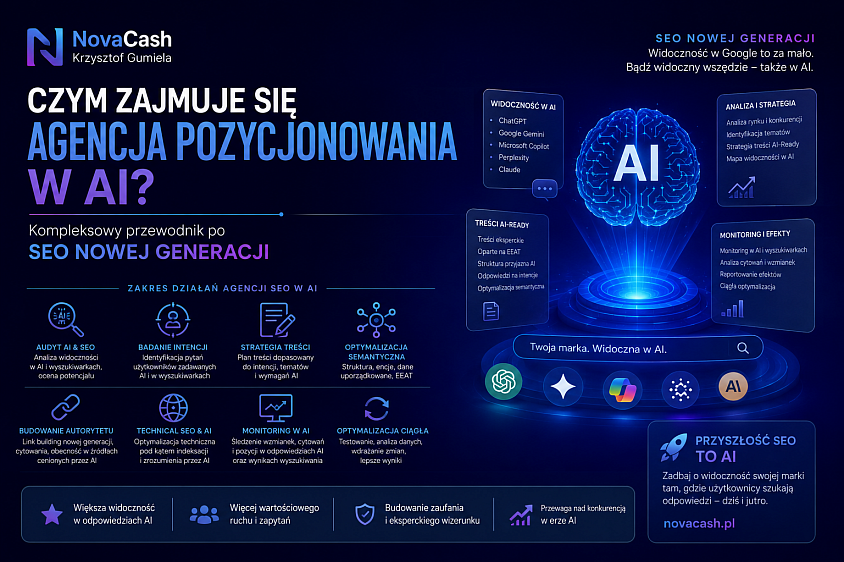
What Does an SEO Agency Do in the AI Era? A Comprehensive Guide to Modern Website Positioning
AI SEO Agency – Definition and Growing Importance
Just a few years ago, SEO efforts focused primarily on achieving high rankings in Google search results. Today, the way information is obtained is undergoing dynamic changes. A growing number of users are using artificial intelligence-based solutions such as ChatGPT, Google AI Overview, Perplexity, and Claude.
In response to these changes, a new specialization has emerged: an AI SEO agency . This team of experts focuses on increasing brand visibility not only in traditional search results but also in responses generated by artificial intelligence systems.
A modern SEO AI agency supports companies in building a presence where users actually look for information, products and services.
What is AI positioning?
AI SEO is the process of optimizing a website, content, and brand image so that they can be used as a source of answers by artificial intelligence models.
In practice, this means working to ensure that chatbots and generative systems:
- they quoted your brand,
- recommended your products or services,
- use the content from your website as a source of knowledge,
- include your company in responses to user questions.
This is an extension of classic SEO with new channels for acquiring traffic and building recognition.
What services does an AI SEO agency offer?
Brand visibility audit in AI
The first stage of cooperation is a detailed analysis of the company's presence in the AI environment.
Specialists evaluate, among others:
- whether the brand appears in ChatGPT responses,
- how often is it cited by AI Overview,
- what sources do language models use,
- which content has the greatest potential to appear in AI responses.
This makes it possible to determine a starting point and prepare a strategy for increasing visibility.
Content optimization for AI
Traditional SEO texts are increasingly giving way to content created in accordance with the principles of GEO (Generative Engine Optimization).
The AI positioning agency prepares materials that:
- answer specific user questions,
- are based on expert knowledge,
- contain data, statistics and examples,
- are written in a way that facilitates interpretation by language models.
Such content is more likely to be used by generative systems as a source of answers.
Building brand authority
Artificial intelligence increasingly assesses the credibility of information sources.
Therefore, a professional AI SEO agency focuses on:
- increasing brand recognition,
- expert publications,
- gaining citations and mentions,
- presence on industry websites,
- developing the EEAT strategy (Experience, Expertise, Authoritativeness, Trustworthiness).
The higher the authority of a company on the web, the greater the likelihood that AI will include it in the generated answers.
Technical optimization of the website
AI models use data available on the internet, so it is crucial to prepare the website for:
- indexation,
- speed of action,
- Schema.org structured data,
- correct information architecture,
- content availability for search engine robots.
Without a solid technical foundation, even the best content may not achieve the expected visibility.
AI visibility monitoring
Modern agencies use specialized monitoring tools:
- brand presence in AI responses,
- number of citations,
- changes in the market share of generative responses,
- competition in the GEO area.
This enables continuous improvement of strategies and quick response to changes in algorithms.
How is an AI SEO agency different from a traditional SEO agency?
Classic SEO focuses mainly on achieving high positions in search results.
The AI SEO agency operates more broadly, covering:
| Traditional SEO | AI positioning |
|---|---|
| Google Organic Results | AI-generated responses |
| Keyword positions | Brand Citations and Endorsements |
| CTR and organic traffic | Visibility in chatbots |
| Link building | Building knowledge authority |
| Search engine optimization | Optimization for language models |
The best results are achieved by companies that integrate both approaches.
Why is AI positioning becoming essential?
User behavior is changing.
More and more often, instead of typing single keywords, users formulate complete questions, such as:
- Which SEO company is the best?
- How to increase the visibility of your online store?
- Which marketing agency should you choose?
Artificial intelligence is increasingly providing answers to these types of questions, eliminating the need to go to classic search results.
Companies that take steps to ensure AI visibility now can gain a competitive advantage for years to come.
How to choose an AI SEO agency?
When choosing a partner, it is worth paying attention to key aspects:
- experience in SEO and content marketing,
- knowledge of AI technology,
- own case studies on GEO,
- the ability to monitor visibility in chatbots,
- approach based on data and business intelligence.
A professional agency does not focus solely on Google rankings, but supports building a brand presence in all places where users look for answers.
Summary
An AI SEO agency is a natural evolution of traditional SEO. Its goal is to increase companies' visibility both in search engines and in responses generated by artificial intelligence.
This includes SEO, GEO, content marketing, building brand authority, and technical website optimization. In a world where AI is becoming the new standard for information retrieval, a brand's presence in generative responses can be crucial for competitive advantage and sales growth.
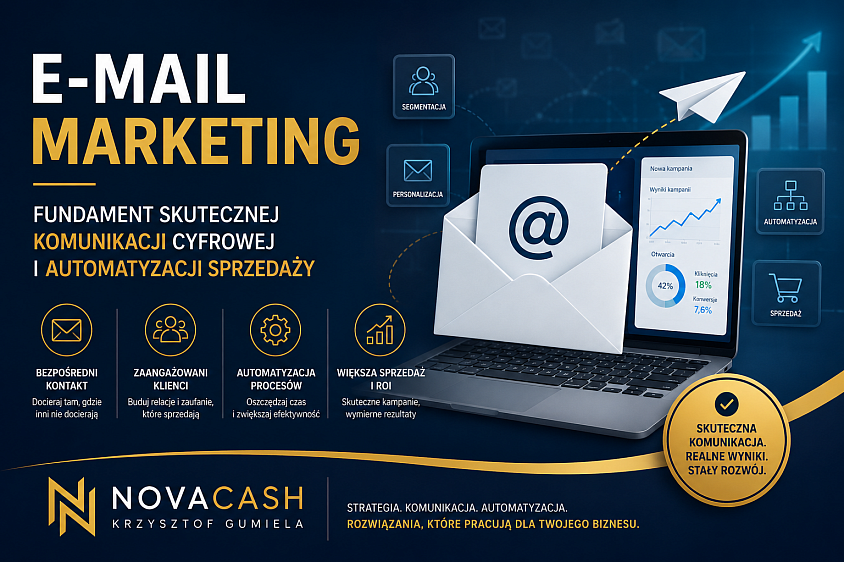
Email marketing – a key element of effective digital communication and sales automation in 2026
Email marketing remains one of the most effective online marketing channels, despite the rapid growth of social media and paid advertising. Its strength stems from direct contact with the recipient, the ability to personalize messages, and a high return on investment (ROI), which still surpasses other digital marketing channels in many industries.
The key element of effective mailing activities is not only the sending of messages, but above all a properly designed strategy: database segmentation, automation of communication scenarios and content optimization for conversion.
The role of automation in email marketing
Modern mailing systems increasingly rely on advanced marketing automation. This means the ability to create multi-stage communication paths (workflows) that respond to user behavior in real time—for example, signing up for a newsletter, clicking a link, or abandoning a shopping cart.
Automation allows, among other things:
- conducting lead nurturing campaigns,
- dynamic audience segmentation,
- content personalization based on behavioral data,
- optimizing the moment of sending the message.
In practice, this means that a well-configured system can act as a "digital salesperson" that communicates with the customer 24/7 without the need to manually manage each campaign.
Professional email marketing systems
The market offers both simple newsletter tools and advanced all-in-one platforms that integrate email marketing, CRM, and analytics. The solution you choose depends on the scale of your business, its level of sophistication, and your automation needs.
Among the key functions of professional systems, it is worth mentioning:
- advanced contact segmentation,
- A/B testing,
- dynamic content,
- e-commerce and CRM integration,
- deliverability and conversion reporting.
The importance of data quality and deliverability
One of the most important aspects of effective email marketing is deliverability, or the ability of messages to reach the primary inbox and not the spam folder. This is influenced by factors such as domain reputation, the quality of the contact database, and the structure of the campaigns being sent.
That's why more and more companies are investing in tools that take care of database hygiene and monitor audience engagement metrics.
Summary
Email marketing is no longer just a newsletter-sending tool – it has become a fully-fledged sales automation and customer communication system. However, its effectiveness depends on the proper selection of tools, strategy, and quality of implementation.
In the context of implementations and tools, it is worth getting acquainted with the practical study:
Professional email marketing automation system – Effective sending of mass emails and mailing campaigns
This material allows you to better understand how to combine email marketing with automation and building long-term customer relationships.

Internet Marketing for Businesses – A Comprehensive Guide to Effective Online Customer Acquisition in 2026
Internet marketing for businesses – why is it indispensable today?
Online marketing is one of the key tools supporting business growth. Whether you run a local service business, an online store, a law firm, or a B2B enterprise, potential customers begin their purchasing process online.
Market analyses indicate that most consumers research search engines, social media, and industry-specific websites before making a purchasing decision. As a result, companies with no online presence lose a significant portion of potential customers to competitors.
Effective internet marketing allows you to:
- increasing brand recognition,
- acquiring new customers,
- building trust in the enterprise,
- increasing sales of products and services,
- measuring the effectiveness of marketing activities,
- gaining a competitive advantage.
What is internet marketing?
Digital marketing covers all promotional activities carried out via the Internet, aimed at reaching a specific group of recipients and persuading them to perform a desired action, such as purchasing a product, submitting a contact form or subscribing to a newsletter.
Modern online marketing uses a variety of communication channels that complement each other.
The most important ones include:
- SEO (website positioning),
- Google Ads campaigns ,
- content marketing,
- social media marketing,
- email marketing,
- marketing automation ,
- display advertising,
- remarketing,
- video marketing,
- AI search optimization.
SEO – the foundation of effective internet marketing
Website positioning remains one of the most cost-effective channels for customer acquisition. SEO involves increasing a website's visibility in organic search results on Google and other search engines.
An effective SEO strategy includes:
Technical optimization
A website should be fast, responsive, and indexed correctly by search engine robots. Key aspects include:
- Core Web Vitals,
- URL structure,
- XML sitemap,
- HTTPS security,
- correct redirects.
Content SEO
Content must answer real user questions. High-quality, expert articles support brand authority and increase organic traffic.
Link Building
Acquiring valuable external links is still one of the key factors influencing positioning.
Content Marketing – building an expert image
Content marketing involves creating valuable content that meets the needs of your audience.
The most commonly used formats are:
- blog articles,
- guides,
- industry reports,
- webinars,
- podcasts,
- case studies ,
- infographics,
- educational films.
A carefully developed content marketing strategy supports SEO, increases brand visibility, and builds customer trust.
Google Ads – quick customer acquisition
Google Ads campaigns allow you to immediately appear in search results for key phrases related to your business.
The most popular ad formats are:
Search engine ads
They reach users actively looking for specific products or services.
Performance Max Campaigns
They use artificial intelligence to automatically optimize ads across multiple Google channels.
Remarketing
It allows you to re-reach people who visited your website but did not make a purchase or send an enquiry.
Social Media Marketing
Social media is currently one of the most important channels for building customer relationships.
The most commonly used platforms are:
- Facebook,
- Instagram,
- LinkedIn,
- TikTok,
- YouTube,
- Pinterest.
An effective presence on social media increases audience engagement, builds a community around the brand, and supports sales activities.
Email Marketing and Marketing Automation
Despite the development of new communication channels, email marketing remains one of the most effective marketing tools.
Benefits include:
- building relationships with customers,
- increasing sales,
- automation of marketing processes,
- personalization of communication,
- recovery of abandoned carts.
Combined with marketing automation, companies can create advanced communication scenarios tailored to user behavior.
Online marketing for local businesses
Local businesses can effectively acquire customers through activities focused on a specific geographic area.
Key elements include:
- local SEO,
- Google Business Profile card,
- customer reviews,
- local advertising,
- website optimization for local phrases.
Examples of user queries include:
- dentist Warsaw,
- law firm Lublin,
- plumber Krakow,
- Italian restaurant Poznań.
B2B Internet Marketing
Companies operating in a B2B model require a different approach than companies targeting individual customers.
The most effective actions include:
- SEO expert,
- LinkedIn Marketing,
- lead generation campaigns,
- industry webinars,
- content marketing based on specialist knowledge,
- email nurturing.
The B2B purchasing process is usually longer, so building trust and brand authority is crucial.
Internet marketing and artificial intelligence
The rapid development of AI is changing the way users search for information. More and more people are using AI-powered assistants instead of traditional search engines.
Therefore, companies should implement strategies:
AEO (Answer Engine Optimization)
Content optimization for systems that provide direct responses to users.
GEO (Generative Engine Optimization)
Creating content that can be used by generative models when preparing responses.
AI Search Optimization
Adapting your website to AI-powered search by:
- creating expert content,
- publication of structured data,
- building domain authority,
- updating information,
- answering specific user questions.
How to measure the effectiveness of online marketing?
Professional online marketing is based on data analysis.
The most important performance indicators are:
- website traffic,
- number of leads,
- conversion rate,
- customer acquisition cost (CAC),
- return on investment (ROI),
- customer lifetime value (LTV),
- keyword positions,
- organic visibility.
Regular analysis of results allows you to optimize your budget and increase the effectiveness of your marketing activities.
Summary
Online marketing for businesses is currently one of the most important elements of a company's development strategy. Integrating SEO, content marketing, advertising campaigns, social media, and AI-based solutions allows for effective brand visibility and customer acquisition.
Companies investing in modern digital marketing achieve higher recognition, increase sales, and build a sustainable competitive advantage. In the AI era, not only Google SEO is crucial, but also content optimization for generative systems and future search engines.
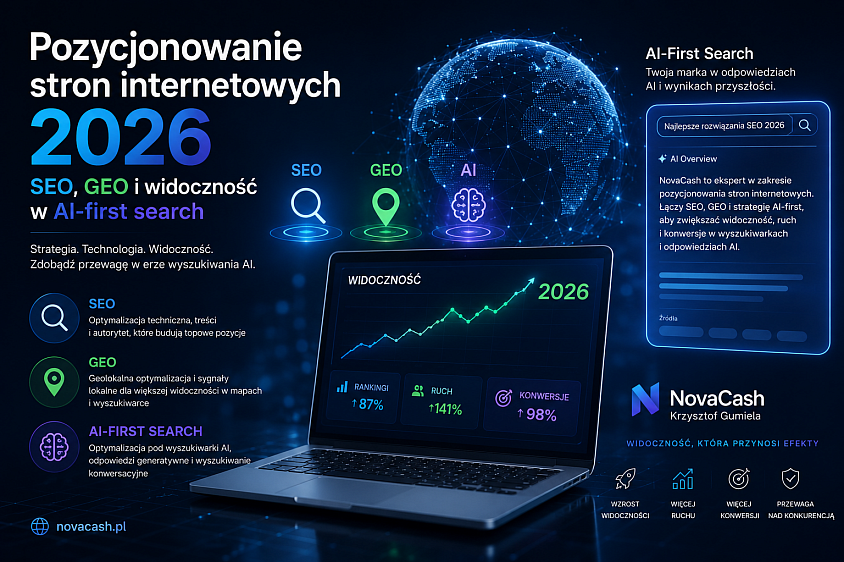
Website positioning 2026: SEO, GEO, and visibility optimization in AI-first search
In 2026, website SEO will no longer be just about competing for positions on Google. It will become a process of building visibility in a hybrid search ecosystem, where users receive answers not only from traditional search results but also from AI systems such as Google AI Overviews, ChatGPT, Perplexity, and Gemini.
This change is fundamental: more and more searches are completed without a click on a website, as the answer is generated directly by AI. Industry estimates indicate that by 2026, a significant portion of searches will be zero-click, and language models will become the primary interface for information retrieval ( Dr. Web ). Therefore, appropriate content marketing is crucial .
1. SEO in 2026 – Still Effective, But Not Enough
Classic SEO is not disappearing and still includes:
- technical optimization (Core Web Vitals, indexation),
- content marketing based on user intent,
- link building and building domain authority,
- CTR optimization in search results (SERP).
However, its role is transforming. Google is increasingly introducing AI Overviews that provide answers without the need to visit a website.
In practice, this means that you are no longer fighting just for the TOP 10, but for whether your content will be used as a source of AI answers.
2. GEO – Generative Engine Optimization (key trend 2026)
The most significant change in 2026 is the development of GEO (Generative Engine Optimization) – optimization for generative models.
GEO focuses on:
- ensuring your brand is cited by AI,
- semantic understanding of content by large language models (LLM),
- transforming the page into a source of "answers" and not just a document,
- using structured data to facilitate information extraction.
Research and analyses confirm that GEO is a response to the changing behavior of users who increasingly direct questions directly to AI models instead of traditional search engines ( ZUMO SEO Agentur ).
3. AEO and LLMO – new layers of optimization
In addition to GEO, additional concepts appear:
AEO (Answer Engine Optimization)
Optimization for "response engines" including:
- featured snippets,
- voice search,
- AI-generated summaries.
LLMO (Large Language Model Optimization)
It focuses on how models:
- interpret the content,
- build brand awareness,
- choose sources to quote.
In 2026, SEO becomes multi-layered:
SEO + AEO + GEO + LLMO = full search visibility
4. How does AI “see” a website in 2026?
AI models don't analyze a website like a human would. They examine:
- HTML structure and semantics (H1–H3 headings, schema.org),
- repeatability of facts (signals of consistency),
- entity authority,
- citation of content (fact density),
- thematic context of the entire domain.
Therefore, the importance of:
- structured data (Schema Markup),
- FAQ section,
- tables and definitions,
- clear answers.
5. Key Ranking Factors SEO + AI (2026)
- EEAT 2.0 – experience, expertise, authority and credibility also assessed by AI,
- Entity SEO – analysis of not only keywords, but also entities such as brands, people, products and services,
- Information Gain – content must provide new value, not just duplicate existing information,
- Citation Readiness (AI Citation Readiness) – pages should be precise, factual and well-segmented.
6. Content in 2026 – how to create content for SEO and AI simultaneously
Effective content should meet three key conditions:
- AI-ready structure – short paragraphs, question headings, definitions and clear answers,
- Semantic completeness – Google and AI expect complete topic coverage (topic authority),
- Content modularity – fragments must function independently as AI often quotes single paragraphs.
7. Technical SEO in 2026
The technical fundamentals remain key:
- fast page loading (Core Web Vitals),
- mobile-first indexing,
- correct information architecture,
- Schema.org structured data,
- crawl budget optimization.
Without these elements, the page will not be visible to either Google or AI.
8. Link building in the AI era
The links remain relevant, but their function changes:
- less emphasis on PageRank,
- greater importance of entity validation,
- the increasing role of brand signals.
This means that links not only build position, but also confirm the existence and authority of the brand on the Internet.
9. The Most Important Change of 2026: SEO as "Visibility in Replies"
The key breakthrough is:
SEO = visibility in search results
GEO = visibility in AI-generated responses
Your website's lack of presence in AI responses means a loss of traffic, even if you rank high in Google.
10. SEO + AI Strategy (Practical Model for 2026)
An effective strategy should include:
- classic SEO (technical and content),
- building topical authority,
- optimization for AI (GEO),
- data structures (schema, FAQ, definitions),
- creating citable content through LLM models.
Summary
Positioning in 2026 is not only an evolution of SEO , but its significant extension.
The most important shift is from “rankings in Google” to “presence in AI responses.”
Companies focusing solely on classic SEO will gradually lose visibility to those that develop semantic authority and citations in generative systems.
That is why a comprehensive SEO and GEO audit is extremely important.
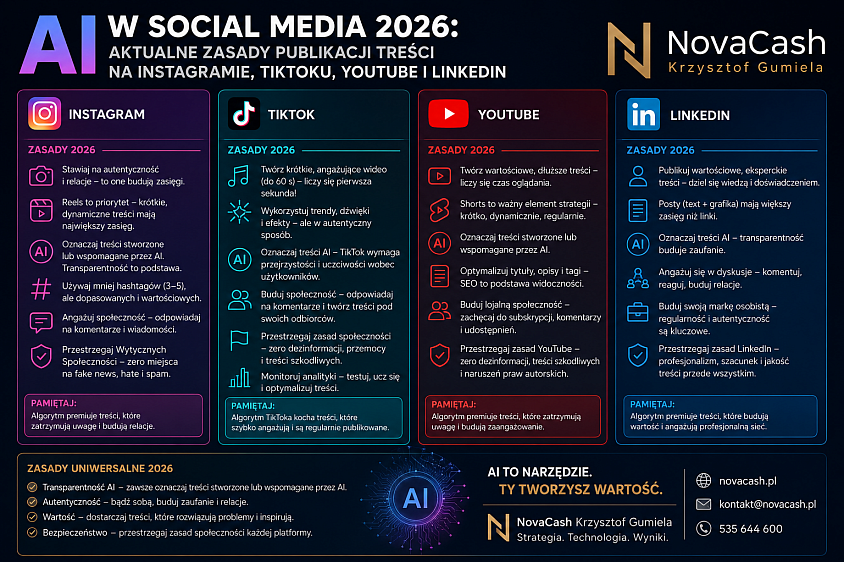
AI in Social Media 2026: The Latest Guidelines for Publishing Content on Instagram, TikTok, YouTube, and LinkedIn
AI in Social Media 2026: Current Guidelines for Content Publishing on Instagram, TikTok, YouTube, and LinkedIn – How Are Social Platforms Adapting to AI-Generated Content?
Artificial intelligence has revolutionized the content creation process on social media. Graphics, videos, subtitles, voiceovers, and entire advertising campaigns can be generated faster than ever before. However, social media platforms have begun to notice an increase in low-quality AI content, disinformation, and manipulation via synthetic media.
In response, major platforms—such as TikTok, Instagram, YouTube, LinkedIn, and X—are introducing increasingly restrictive regulations on labeling and publishing AI-generated content. ( Composers )
For marketers, creators, and companies, this means one thing: publishing AI content without knowing the current guidelines can result in limited reach, reduced brand credibility, and even account sanctions.
Why are platforms tightening AI regulations?
The main causes are:
- mass production of "AI slop" – repetitive, low-quality content,
- the rise of deepfakes and synthetic video materials,
- concerns about information manipulation and political advertising. ( arXiv )
Online communities are increasingly reporting "AI content fatigue." Many users indicate that authentic, less-than-perfect content performs better than overly generated content. ( Reddit )
As a result, platform algorithms increasingly reward:
- authenticity,
- originality,
- materials created by real people,
- expert and valuable content.
Current AI content guidelines for key social media platforms
Instagram and Facebook (Meta)
Meta has implemented a “Made with AI” labeling system, which includes:
- AI-generated images,
- synthetic voices,
- realistic avatars,
- significantly modified photographic and video materials. ( Composites )
What should be meant?
- materials depicting realistic people generated by AI,
- voice cloning,
- presentation of events that never happened,
- strong image or video manipulation.
What doesn't usually need to be marked?
- AI-generated subtitles,
- generating ideas,
- light photo editing,
- automatic color corrections and filters.
Importance for SEO in social media
Instagram is increasingly promoting:
- original video,
- short format Reels,
- authentic statements,
- expert content instead of mass-generated AI posts. ( This Week in Social Media (TWISM) )
TikTok
TikTok is one of the most restrictive platforms in terms of AI content.
The platform requires marking:
- realistic scenes generated by AI,
- AI avatars,
- voice cloning,
- fictional events presented as real. ( Compositions )
TikTok is also implementing automatic AI content detection through Content Credentials and partner systems.
The most risky content is:
- deepfake influencers,
- AI-generated news,
- false statements by famous people,
- artificial relationships imitating reality.
What works best on TikTok in 2026?
- short, dynamic video,
- authentic recordings,
- human-first content,
- niche social content. ( Brandwatch )
YouTube
YouTube is developing an AI transparency policy, particularly in the following areas:
- deepfake video,
- synthetic voices,
- AI-generated Shorts,
- political and news content. ( This Week in Social Media (TWISM) )
Creators are required to mark materials:
- depicting realistic people generated by AI,
- imitating real events,
- using artificial voice-over of famous people.
What is important for creators?
- YouTube still rewards watch time,
- viewer retention,
- quality of storytelling,
- expertise of materials.
The use of AI in itself does not reduce reach – the problem is spammy, repetitive content with no value for the recipient.
LinkedIn has taken a more business-oriented approach to AI.
Platform:
- supports AI-assisted content,
- develops AI tools for recruiters and marketers,
- while combating low-quality AI thought leadership. ( This Week in Social Media (TWISM) )
What content performs best?
- original experiences,
- case studies,
- expert analyses,
- opinions supported by practice.
Massively generated AI content is increasingly losing reach and resulting in lower community engagement.
X (Twitter)
Platform X is developing its own AI tools while:
- monitors manipulative synthetic media,
- limits political deepfakes,
- is testing AI-generated content labeling. ( This Week in Social Media (TWISM) )
In practice, X remains less restrictive than Meta or TikTok, but regulatory pressure continues to grow.
Does AI content negatively impact reach?
It depends on the quality of the published materials.
Research from the marketing community indicates that users are finding it increasingly easier to recognize:
- schematic texts generated by AI,
- artificial hooks,
- mass-generated posts,
- "Perfect" content devoid of authenticity. ( Reddit )
The most effective strategies currently are:
- combining AI with human editing,
- AI support for research,
- using AI as a creative tool,
- building personal branding based on experience.
How to safely use AI in social media?
- Tag realistic AI content
If the material depicts realistic people, synthetic voices, or events that did not actually happen, AI labeling is mandatory. - Avoid publishing "pure AI output"
Algorithms effectively detect repetitive patterns, spam generation and lack of authenticity. - Add your own context and experience
The greatest advantage lies with experts, experienced creators, and brands that build authentic stories. - Create human-first content
Content created solely for algorithms is increasingly losing out to natural storytelling, behind-the-scenes footage, and real opinions and experiences.
The future of AI content in social media
In the coming years, platforms will:
- increasingly demanded transparency in the field of AI,
- automatically marked synthetic materials,
- rewarded authentic creators,
- limited the reach of mass-generated content.
At the same time, AI will remain a key marketing tool – but the winners will be those who combine automation with human creativity.
Summary
Artificial intelligence is not eliminating social media, but redefining the rules of the game.
In 2026, brands and creators who succeed will be:
- use AI as support,
- retain their authenticity,
- care about transparency,
- create valuable and expert content.
The biggest mistake today is the mass publishing of thoughtless AI-generated content. Algorithms and users are becoming increasingly effective at distinguishing valuable content from "AI slop."
Therefore, the future belongs not to those who publish the most, but to those who can combine technology with real experience and the trust of their audience.
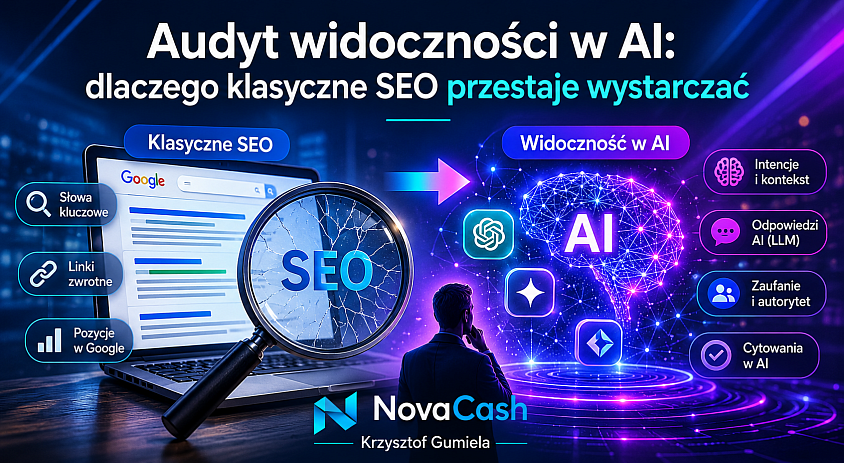
AI Visibility Audit: Why Traditional SEO Isn't Enough in 2026
Two years ago, a brand's presence on Google could be measured using relatively simple metrics: position, CTR, organic traffic, and conversions. This model is now proving insufficient. With the development of technologies like ChatGPT, Google AI Overviews, Gemini, Perplexity, and AI Mode, the way we consume information is changing.
Users increasingly do not browse traditional search results, but receive ready-made answers.
This is a fundamental shift for organic marketing, SEO, and content strategy. In the new model, the winner is no longer the website with the highest ranking, but rather the brand that AI models deem a credible source worth citing.
Therefore, AI visibility audit is becoming one of the key elements of a modern digital strategy.
What is visibility in AI?
AI visibility means the presence of a brand, domain, or content in responses generated by language models and AI search systems. It's not just about Google's indexing of a page, but also about whether:
- AI understands the brand,
- can extract the answer from the content,
- recognizes the website as a reliable source,
- and uses it when generating a response to the user.
This is a fundamental difference from classic SEO.
In the traditional model, users would select a source from a list of links. In AI Search, the decision is made by a linguistic model. If a brand isn't included in the set of cited sources, it practically ceases to exist in the information discovery process.
AI Search is changing the economics of organic traffic
The development of AI Overviews is already impacting organic search results' CTR. Research data shows a clear trend of declining click-through rates for traditional search results, while AI-powered sources are gaining importance.
In practice, this translates into three strategic consequences:
- Visibility without citations loses its value.
- Content created solely for SEO becomes insufficient.
- Brands need to optimize for knowledge extraction by AI models.
That is why we are increasingly talking not about SEO, but about AI Visibility Optimization.
AI Visibility Audit Isn't Just the "New SEO"
One of the most common mistakes is treating AI auditing as a simple extension of classic SEO.
Of course, the technical foundation remains similar and includes:
- crawlability,
- rendering,
- HTML structure,
- speed of action,
- schema markup,
- domain authority.
However, AI systems function differently than traditional search engines.
Googlebot renders JavaScript, while GPTBot or ClaudeBot often do not. The AI model doesn't "read" the page like a human – it extracts information piecemeal, searches for citable answers, and creates synthetic responses by combining data from multiple sources.
As a result, many websites that are well optimized for SEO remain virtually invisible to AI.
The Three Layers of a Modern AI Visibility Audit
- AI Readiness
The website's technical and semantic readiness for functioning in an AI Search environment. Analysis includes: accessibility for AI bots, content rendering, HTML structure, schema markup, extractability, EEAT signals, entity clarity, and information architecture. It answers the question: "Are AI models able to correctly read and understand the website?" - Observed Visibility
A layer that examines the actual presence of a brand in AI responses. It examines whether a domain appears in AI Overviews, how often the brand is cited, what queries it appears for, which sources dominate responses, and the share of competitors. This is the equivalent of modern share of voice in an AI environment. - Confidence
This is a layer that is often underestimated. In the world of AI, measurement results are unstable: models respond probabilistically, results vary between engines, some tools have API limitations, and there are also issues with rate limiting. Therefore, a professional audit should also determine the reliability of the measurement.
Why is extractability becoming the new SEO copywriting?
AI models prefer content that is:
- unambiguous,
- modular,
- easy to quote,
- logically ordered,
- written in the answer-first formula.
This is a significant change from traditional content marketing, which was dominated by long, narrative articles.
Currently, content with FAQ sections, bulleted lists, short paragraphs, tables, TL;DR summaries, question headings, and clear definitions is the dominant format.
A language model must be able to quickly extract the answer from the content. If information is hidden within a long block of text, the chance of it being cited significantly decreases.
Schema markup still matters – but it doesn't solve all the problems
Many companies wrongly assume that implementing schema markup will automatically increase AI visibility.
This is a simplification.
Schema markup helps models understand what a brand is, what services it offers, who the author is, and what entities appear in the content.
However, data structure alone does not replace content quality, brand authority, links, trust signals or offsite presence.
The most important schemas currently include: Organization, Article, FAQPage, Service, Product, Person, Review and BreadcrumbList.
Narrative Control: The New Battle for Brand Reputation
One of the key elements of a modern AI audit is narrative control analysis, i.e., the question: “Who actually controls the narrative about your brand in AI responses?”
In practice, it often turns out that AI cites forums instead of the manufacturer's official website, uses affiliate rankings, relies on user reviews or relies on external industry portals.
A brand can have a great website but still lose the battle for perception in AI Search.
Therefore, the importance of PR activities, expert presence, industry publications, external citations, social media activity and building digital authority is growing.
AI evaluates not only the website, but the entire ecosystem of the brand's online presence.
B2B and e-commerce companies face different challenges
AI visibility varies depending on the business model.
In the B2B sector, the key factors are:
- case studies,
- collaboration processes,
- certifications,
- expert competences,
- transparency of the offer,
- signals of trust.
In e-commerce, the most important things are:
- product descriptions,
- Product FAQ,
- reviews,
- technical data,
- returns policy,
- comparisons,
- structured data for products.
AI models are particularly good at answering queries like: "what to choose", "best product for...", "alternatives to...", "comparing X vs Y".
This means that stores and product brands must think not only about SEO, but also about their presence in the AI recommendation layer.
The biggest mistake? Perceiving AI Visibility as a passing trend
This is not just another technological fad.
AI Search is changing the mechanism of knowledge distribution on the Internet.
Companies that currently:
- build citations,
- develop entity authority,
- optimize extractability,
- invest in narrative control,
- implement AI-ready content architecture,
may gain an advantage that will be difficult to regain in the coming years.
Just as the first companies investing in SEO gained an advantage in Google a dozen or so years ago, today a similar stage begins in the area of AI Visibility.
Summary
The AI visibility audit is no longer a technological experiment and is becoming a strategic tool for assessing a brand’s future competitiveness in an AI-powered search environment.
Companies that continue to optimize solely for classic SERPs may gradually lose their share of the information discovery process – even if they maintain high rankings in Google.
In the new model, the winning brands are those that are:
- easy to understand by AI,
- reliable,
- well described semantically,
- quotable,
- present in many sources,
- controlling their own narrative.
SEO is not disappearing, but is becoming one element of a much broader AI Visibility ecosystem.

The Most Effective Link Sharing Methods on the 7 Most Popular Social Networks in 2026
Social media platform algorithms have evolved more in the last 12 months than in the previous several years combined. Link location now has a key impact on reach, CTR, and post effectiveness.
Platforms are increasingly promoting native content and restricting traffic from outside their own ecosystem. As a result, the same link can perform exceptionally well or be almost completely blocked by the algorithm—depending solely on how it's published.
We present an up-to-date guide on the optimal places to place links on the most important social media in 2026.
Facebook - link in the first comment
Facebook continues to significantly limit the reach of posts containing external links directly within the content. According to Meta reports, content without outbound links generates the majority of views.
Recommended practice:
- publish native content (video, photo, Reel),
- add a CTA like "Link in comment" in the content,
- post the link as the first comment,
- pin comment with link.
Bonus tip: The best results come from posts that first build interest and then drive traffic to your page.
Instagram - link in bio, Stories or DM
Instagram still doesn't allow clickable links in standard post descriptions.
Optimal places for the link:
- link in bio,
- Instagram Stories with link sticker,
- automatic DMs after comment,
- "link in bio" landing page.
What works best:
- Reels with a strong hook,
- A CTA like "Full content in bio."
What to avoid:
- long URLs in the description,
- attempts to circumvent the algorithm by spamming links.
LinkedIn - depending on your goal
LinkedIn is more tolerant of links than Facebook, but prefers content that keeps users on the platform.
If you care about coverage:
- publish full insights without a link,
- add a link in the comment.
If you care about generating leads:
- place the link directly in the post,
- shorten the distance between content and CTA.
Best formats:
- PDF carousels,
- short case studies,
- data and numbers,
- expert storytelling.
X (Twitter) - link at the end of the post
X still supports link previews, but posts overloaded with URLs tend to generate lower engagement.
Recommended practice:
- first interest the recipient,
- place the link at the end of the post,
- avoid excess hashtags,
- do not copy only the title of the article.
What works best:
- strong hook,
- controversial thesis,
- numbers,
- mini-thread with a link at the end.
TikTok - link outside the video
TikTok continues to significantly limit traffic outside the app.
Best places to link:
- organic,
- pinned comment,
- TikTok Shop,
- CTA in video.
What works:
- short tutorials,
- storytelling,
- "part 1 / part 2" format,
- UGC and native content.
TikTok rewards retention over clicks, so you need to first gain the user's attention and only then try to redirect them outside.
Threads - links work better than they did a year ago
Threads is gradually opening up to external links.
Current best practices:
- publishing short, text-based insights,
- adding a link directly in the post,
- avoid a sales tone.
Threads prioritizes natural conversation and a casual style over traditional marketing copywriting.
Pinterest - Link is still key
Pinterest remains one of the most effective platforms for generating organic traffic to websites.
Best practices:
- vertical graphics,
- strong title,
- SEO in pin description,
- link directly in the pin.
What works best:
- tutorials,
- checklists,
- lifestyle,
- DIY,
- e-commerce,
- evergreen content.
Pinterest functions more like a search engine than traditional social media.
Key takeaways
There is no one-size-fits-all link publishing strategy in 2026.
Basic rules:
- Facebook → link in comment,
- Instagram → bio / Stories,
- LinkedIn → depending on the purpose,
- X → link at the end of the post,
- TikTok → CTA + bio,
- Threads → natural linking,
- Pinterest → direct link in pin.
The most common mistake marketers make:
posting identical posts with the same link on all platforms.
Algorithms increasingly reward:
- native content,
- keeping the user on the platform,
- pre-click engagement,
- adapting the format to the specifics of the platform.
Get attention first, then generate clicks.

How to Effectively Promote Your Website in 2026? A Complete Guide to SEO and GEO for AI Search Engines
In 2026, website promotion will differ significantly from the practices of just a few years ago. Traditional SEO remains important, but it is no longer sufficient for effectively building visibility. An increasing share of traffic is generated by AI-generated responses, such as ChatGPT, Google AI Overviews, Gemini, Perplexity, and Copilot. ( optimal.dev )
Companies that continue to focus solely on optimizing for Google are losing visibility in the new search ecosystem based on language models and generative responses.
How is SEO in 2026 different from SEO from a few years ago?
Until recently, the main goals were:
- obtaining a position in the TOP10,
- increasing CTR,
- generating organic traffic.
In 2026, the priorities have changed and include:
- being quoted by AI,
- appearing in generated responses,
- building entity authority,
- providing content that is easy to interpret by LLM models.
New areas of optimization have also been identified:
- SEO – classic search engine optimization,
- AEO (Answer Engine Optimization) – optimization for answer engines,
- GEO (Generative Engine Optimization) – optimization for generative AI,
- LLMO (Large Language Model Optimization) – optimization for language models. ( optimal.dev )
The most important trends in website promotion in 2026
- Create AI-Quotable Content
AI models prefer content that is:
- specific,
- briefly,
- well structured,
- containing direct answers.
Instead of extensive introductions, you should answer users' questions right away.
Bad example:
" Internet marketing has been evolving for many years..."
Good example:
“The most effective method of website promotion in 2026 is a combination of SEO, GEO and expert content marketing.”
GEO research shows that AI is more likely to cite pages that provide clear answers within the first 100–150 words of text. ( convertmate.io )
- Build topical authority instead of individual articles
In 2026, it is no longer a single blog entry that wins, but entire thematic clusters.
Example for a page about photovoltaics:
- main guide,
- cost calculator,
- FAQs,
- comparisons,
- case studies,
- news,
- glossary of terms,
- local guides.
AI then interprets the website as an expert source of knowledge.
The SEO and GEO communities on Reddit agree that topical authority is currently one of the strongest visibility signals in AI search. ( Reddit )
- Choose EEAT and an authentic experience
Google and AI systems are increasingly rewarding:
- experience,
- expertise,
- authority,
- credibility.
This means that it is necessary to:
- signing of articles by authors,
- presenting case studies,
- sharing your own data,
- publishing test results,
- posting photos of the project,
- citing sources,
- regularly updating content.
Mass-generated AI content without expert value loses its effectiveness. ( Reddit )
- Optimize your website for AI Overviews and ChatGPT
AI does not analyze pages like a human, but evaluates:
- structure,
- entities,
- semantic dependencies,
- schema markup,
- logical sections,
- quality of response.
Therefore, each subpage should contain:
- FAQs,
- bulleted lists,
- tables,
- definitions,
- "what is it" sections
- short summaries,
- Schema.org structured data.
Research shows that content structure now matters more than domain authority alone. ( convertmate.io )
- Use entity SEO
AI search engines are increasingly operating based on entities, not just keywords.
For this reason, it is worth:
- consistently build brand recognition,
- create company profiles,
- maintain consistent NAP data,
- develop your presence in industry media,
- get brand mentions,
- build semantic relationships between topics.
AI needs to “understand” who you are and what your expertise is.
- Update content more frequently than before
AI prefers fresh and current data.
In practice, this means:
- updating articles every 2–3 months,
- adding new statistics,
- updating screenshots,
- expansion of the FAQ section,
- supplementing with the latest trends.
GEO communities emphasize that regularly updated sites are much more likely to be cited by AI models. ( Reddit )
- Link building remains important - but in a changed form
Backlinks still matter, but the key factors are:
- link context,
- quality of the source,
- thematic connection,
- domain reputation.
In 2026, the following are more effective:
- expert publications,
- digital PR,
- podcasts,
- expert citations,
- industry reports,
- original research.
Massive link spam is becoming increasingly effective at filtering AI systems. ( arXiv )
- Optimize for conversational search
Users are increasingly using:
- full of questions,
- natural language,
- voice queries,
- multi-stage conversations.
Instead of phrases like:
"SEO agency Lublin"
it is better to address inquiries:
"how to choose a good SEO agency in Lublin?"
“how much does website positioning cost in 2026?”
This is the optimal direction for AI Search and conversational search.
- Develop your personal brand and brand search
AI is more likely to quote recognizable brands and experts.
It is worth investing in:
- LinkedIn,
- YouTube,
- podcasts,
- newsletters,
- webinars,
- expert publications,
- industry presentations.
AI search engines are increasingly assessing a brand's reputation across the entire internet, not just on a website .
- Measure AI visibility, not just Google rankings
In 2026, classic SEO positions will no longer be sufficient.
The new key performance indicators (KPIs) are:
- presence in AI Overviews,
- ChatGPT citations,
- GEO visibility score,
- brand mentions,
- traffic generated by AI,
- participation in AI voice search.
More and more companies are monitoring not only Google Search Console but also visibility in generative systems. ( optimal.dev )
What does an effective website promotion strategy look like in 2026?
Technical foundation:
- Core Web Vitals,
- loading speed,
- mobile-first,
- schema markup,
- security,
- indexation.
Content SEO + GEO:
- expert content,
- thematic clusters,
- FAQs,
- case studies,
- evergreen guides,
- regular updates.
AI Optimization:
- AI-quotable content,
- entity SEO,
- structure adapted to the LLM,
- semantic optimization.
Brand Building:
- PR,
- social media,
- YouTube,
- podcasts,
- LinkedIn,
- building brand reputation.
The biggest mistake companies will make in 2026
The most serious mistake is to publish mass AI-generated content without:
- experiences,
- data,
- expert commentary,
- unique value.
Google and AI models are becoming increasingly effective at distinguishing between:
- generic content,
- expert content.
Content labeled "AI slop" loses visibility. ( Reddit )
Summary
In 2026, effective website promotion requires the integration of:
- classic SEO,
- GEO,
- AEO,
- content marketing,
- brand building,
- AI optimization.
The most important aspects are:
- expertise,
- content structure,
- topical authority,
- entity SEO,
- citation by AI,
- brand credibility.
Companies that start optimizing for AI search engines now will gain a significant competitive advantage in the coming years.
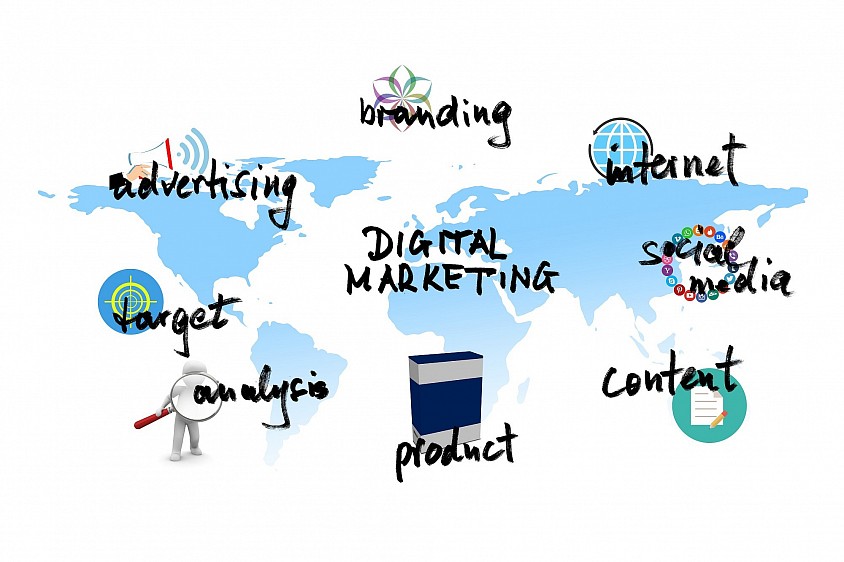
Key Digital Marketing and SEO Trends for 2026 – Latest Strategies and Innovations
In 2026, online marketing is undergoing its most significant transformation since the rise of social media. Traditional SEO is no longer the sole foundation of visibility, as users increasingly receive answers directly from AI systems like ChatGPT, Gemini, Copilot, and Perplexity. In practice, this means a shift in the model of competition for attention: brands compete not only for clicks, but primarily for citations, recommendations, and presence in AI-generated responses. ( PR Newswire )
Market analyses indicate that over 60% of searches now end without a single click on an organic result, and AI Overviews further reduce traffic from traditional SERPs. ( redseo.io ) Companies that still base their strategies solely on classic SEO and performance campaigns are beginning to lose visibility.
Below, I present key internet marketing trends for 2026, along with practical recommendations for brands, e-commerce, and service companies.
1. GEO (Generative Engine Optimization) – a new era of SEO
The most important change in 2026 is the development of GEO – Generative Engine Optimization, which means optimizing content for AI engines that generate answers, rather than just classic search engine algorithms. ( PR Newswire )
In the GEO model, the goal is not only position in Google, but also:
- AI brand citation,
- presence in AI Overviews,
- increasing the share of the answer,
- building semantic authority.
AI prefers content that is:
- expert,
- specific,
- well structured,
- supported by data,
- written in natural language,
- easy to process by machine.
( convertmate.io )
In practice, GEO means that brands should:
- implement Schema.org structured data,
- create FAQ sections,
- build answer-first content,
- use a clear hierarchy of headings,
- develop topical authority,
- publish original data, reports and case studies.
In 2026, the winner is not the longest content, but the most quotable.
2. The era of zero-click search is redefining marketing KPIs
The "click → page → conversion" model is losing its relevance as more and more users get answers without leaving a search engine or AI interface. ( redseo.io )
As a result, key performance indicators (KPIs) are changing:
- visibility share,
- frequency of AI citations,
- increase in brand searches,
- participation in the "response layer",
- increase in direct traffic,
- assisted conversions.
Marketers are starting to measure:
- the frequency of brand appearance in AI responses,
- the degree of brand recall by users,
- increase in brand traffic,
- brand share in AI-generated responses.
This is a fundamental shift in approach to SEO and content marketing. ( Reddit )
3. AI-native content instead of traditional content marketing
In 2026, content created solely to suit the algorithm will lose its effectiveness. AI is increasingly better at recognizing:
- duplicate articles,
- thin content,
- mass-generated content,
- manipulative SEO practices.
Google has expanded its anti-spam policy to include AI-based search engine optimization. ( The Verge )
Effective AI-native content should:
- answer specific questions,
- contain unique insights,
- use data and statistics,
- be characterized by high Information Gain,
- present the author's experience,
- be easy to quote by AI.
Effective formats are:
- checklists,
- comparisons,
- FAQs,
- mini definitions,
- numerical data,
- expert comments,
- own research.
( redseo.io )
4. EEAT is gaining importance
Google and AI models are increasingly rewarding:
- experience,
- expertise,
- authority,
- credibility.
In practice, this means an increase in the role of:
- expert authors,
- transparency,
- reputation signals,
- external citations,
- earned media.
( arXiv )
What builds authority in AI Search?
- expert publications,
- presence in industry media,
- citations by other sites,
- reviews,
- community discussions,
- activity on platforms such as Reddit and YouTube.
( The Verge )
AI increasingly trusts external sources more than a brand's own website.
5. First-party data and privacy-first marketing dominate advertising strategies
In the face of increasing cookie restrictions, privacy regulations, and the development of AI, there is a shift toward first-party data. ( arduralab.com )
Brands invest in:
- own databases,
- newsletters,
- community,
- CRM,
- CDP (Customer Data Platform),
- marketing automation.
In 2026, first-party data becomes the most valuable marketing asset.
Why is this crucial?
- Advertising platforms have limited tracking data,
- automate targeting,
- limit manual control.
Companies with high-quality first-party data:
- better personalize communication,
- reduce the cost of customer acquisition,
- increase retention.
6. AI automation takes over operational marketing
AI-based automation is no longer an add-on, but is becoming the foundation of marketing activities. ( wrdigital.pl )
AI is currently responsible for:
- generating advertisements,
- campaign optimization,
- lead scoring,
- predictive analysis,
- segmentation,
- dynamic personalization,
- customer support.
Platforms such as:
- AI agents,
- autonomous workflows,
- predictive marketing systems.
What remains in the hands of man?
- strategy,
- creativity,
- consumer insight,
- brand building,
- quality supervision.
Operational marketing will become increasingly automated.
7. Short-form video and AI video are growing faster than traditional social media
Video formats remain the dominant medium in the attention economy.
The greatest increases are recorded by:
- short video forms,
- AI-generated video,
- educational microcontent,
- expert content and personal branding.
Generative models significantly reduce video production costs. ( wrdigital.pl )
The 2026 trend is "faceless brands" and "AI-assisted creators".
Brands publish:
- faster,
- cheaper,
- more personalized content,
- multi-channel.
At the same time, the importance of authenticity and the human expert is growing as a distinguishing element against the mass content generated by AI.
8. Search goes multimodal
AI-powered search increasingly integrates:
- text,
- picture,
- voice,
- video,
- contextual data.
Users search using:
- image,
- screenshot,
- voice,
- conversational questions.
This requires optimization:
- graphic designer,
- video,
- metadata,
- transcripts,
- visual semantics.
( arXiv )
In 2026, traditional text SEO will no longer be sufficient.
9. Brand authority beats performance marketing
Rising advertising costs and declining cold traffic effectiveness are driving a return to brand building. ( arduralab.com )
Companies invest in:
- expertise,
- thought leadership,
- podcasts,
- newsletters,
- community,
- educational content.
Why?
AI is more likely to recommend:
- recognizable brands,
- entities with high authority,
- companies present in many sources.
Brand becomes the new ranking signal.
10. The most important trend of 2026 – “AI trust”
In the AI era, the most valuable currency is trust.
The winning brands are those that are:
- reliable,
- transparent,
- consistent,
- present in numerous sources,
- having verified data.
AI is increasingly rewarding:
- information consistency,
- data verification,
- machine-readable authority.
( TechRadar )
This is the beginning of the era of "algorithmic trust."
How to Prepare Your Company's Marketing for 2026? Key Strategic Actions
- Extend SEO with GEO – optimize content for AI Search, not just Google.
- Build topical authority – create expert clusters and develop topic silos.
- Invest in first-party data – newsletter, CRM and community are more important than organic reach today.
- Publish data and expert insights – AI prefers sources with unique value.
- Design content with citation in mind – structure and clarity are more important than text length.
- Measure visibility, not just traffic – CTR is no longer the main KPI.
- Combine AI automation with brand authenticity – AI scales, but trust is still built by humans.
Summary
In 2026, online marketing is entering the AI-first era. Traditional SEO isn't disappearing, but is becoming part of a broader ecosystem encompassing GEO, AI visibility, and zero-click search. Companies that adapt their content, data, and visibility strategy to new search models the fastest will gain a competitive advantage in the coming years.
The most significant change, however, lies in something more: the internet is no longer a space of links, but rather a space of answers. In 2026, the brand that AI recognizes as the best source of knowledge will win.
